Showing posts with label New York. Show all posts

Monday, March 11, 2013

Tahawus Tract, NY


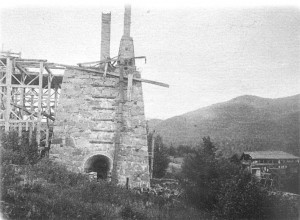
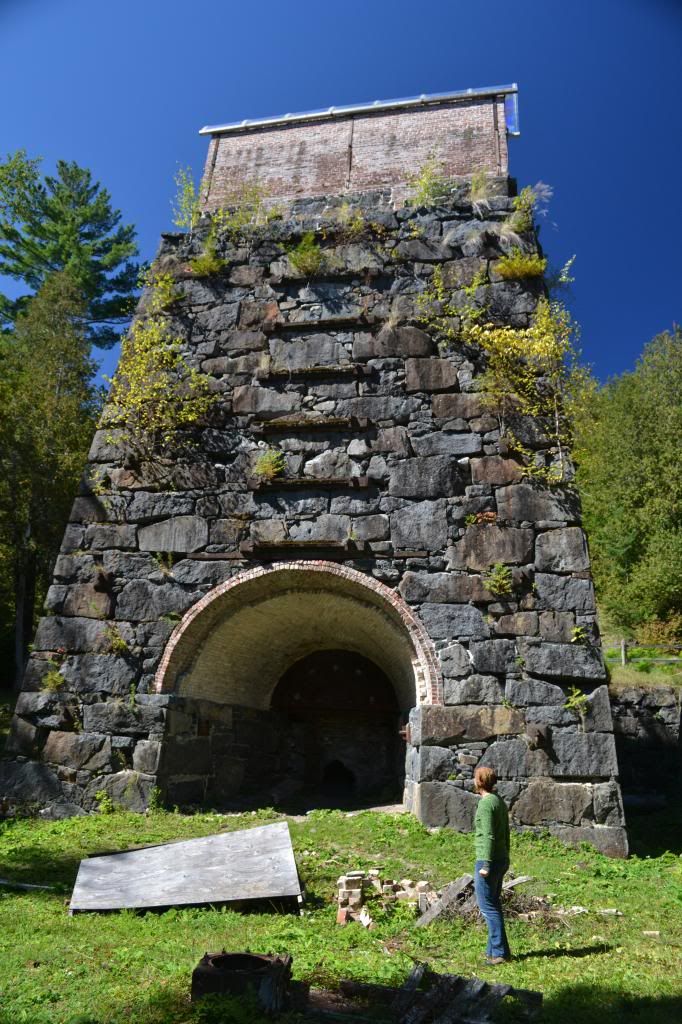
Deep in the wilderness of the eastern Adirondacks of New York was a small mining town that has gone by several names: McIntyre, Adirondac and Tahawus.  It was once a major site for iron mining and smelting, the old McIntyre blast furnace built in 1854 still standing testament to the existence of the industry.  The iron ore deposits were discovered in 1826 by Archibald McIntyre and what was later dubbed the Upper Works was mined for the ore until the mid 1800s.  A strange impurity was found in the iron ore that made the task of smelting the iron rather difficult for the technology of the time and finally the mines closed, the people left and the town fell to the wilderness.  However, lumber was a lucrative business on the foothills of Mt. Marcy and abundant game brought sport hunters.  Later named the Tahawus Tract, the private hunting club leased and managed the land from the miner's heirs. Photo of the McIntyre blast furnace from www.clearwater.org

In the 1940's technological breakthroughs rekindled the mining industry in the Tahawus Tract when the previously mysterious mineral called titanium could be processed.  National Lead Industries continued working the mine until 1989, the rough estimate of the titanium mined in the neighbourhood of 40 million tons.

I was attending the Fall NRO (Northeastern Regional Organization of the National Speleological Society) gathering at Natural Bridge and Caverns in the southern Adirondacks.  Even though I attended college in Vermont, just a spitting distance from the New York border I had always concentrated my efforts close to campus.  So after an enjoyable weekend of caving was getting ready to head home when someone had mentioned the local "ghost town".  was immediately interested and postponed the five hour drive back to the seacoast of New Hampshire.

After some Googling, I found some vague directions to "Tahawus" and some photos.  Tom, Dave and Ramon decided that they were going to head back to the Boston area instead and  I set off..  It took us a little bit of driving in circles since GPS signal in the area is not reliable and I didn't have a map, but finally when I spotted Upper Works Road and was heading for the access to Mt. Marcy, I knew it was the right path.
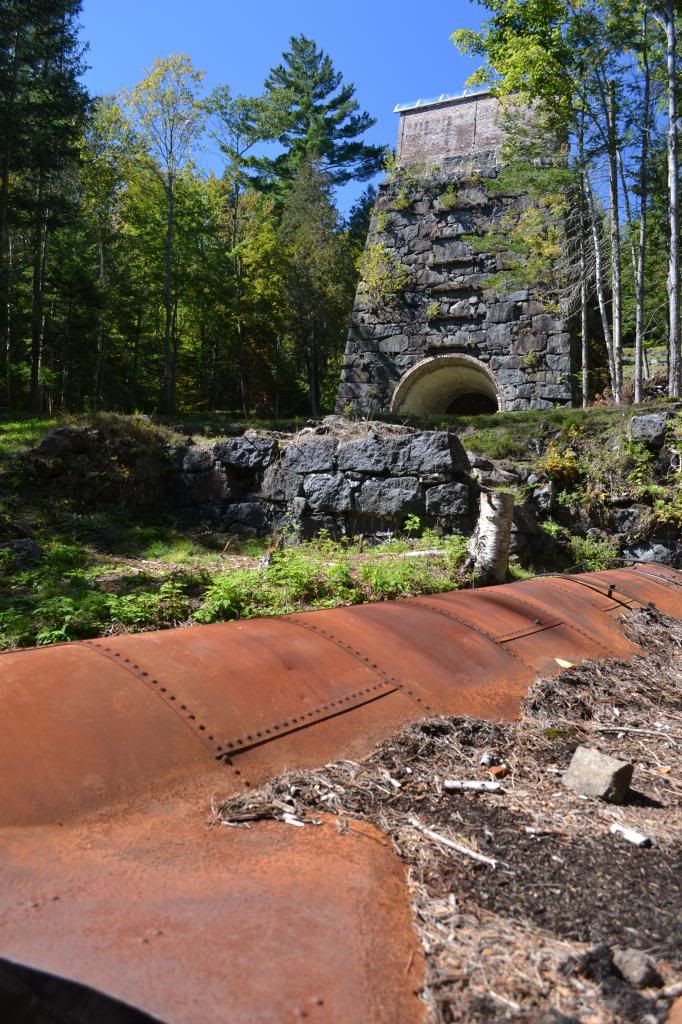
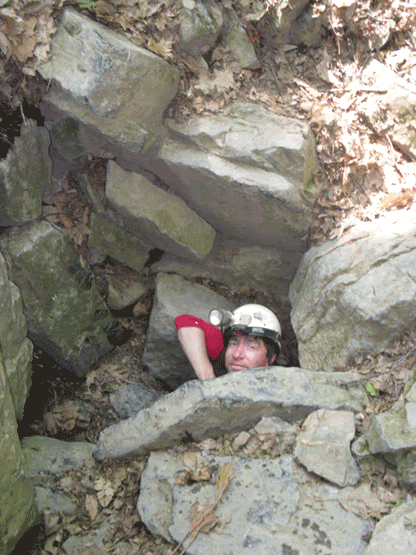
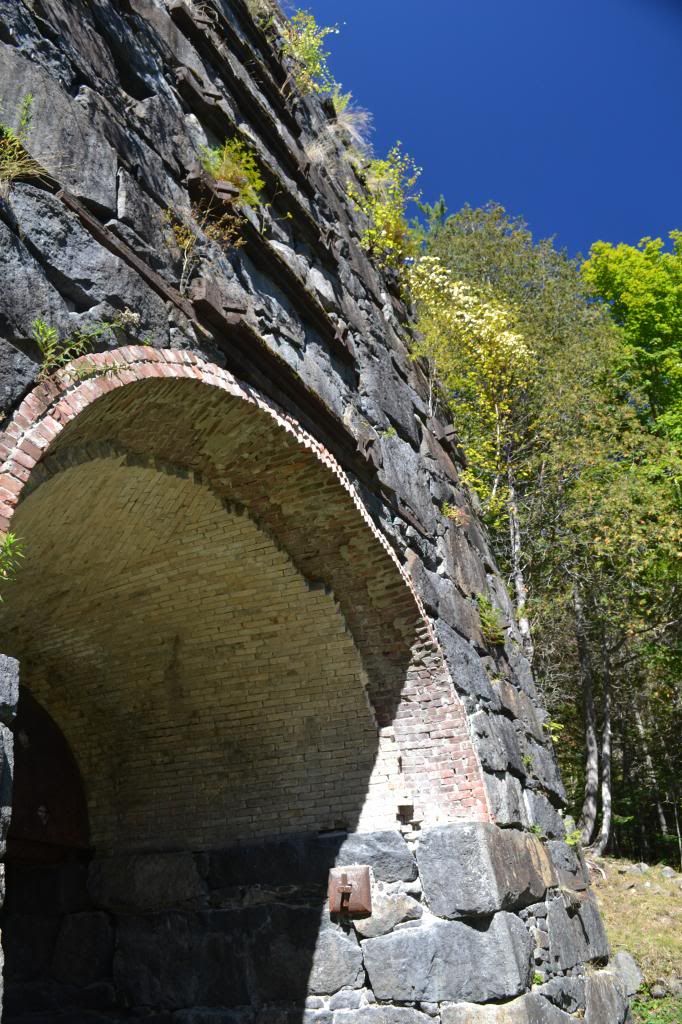
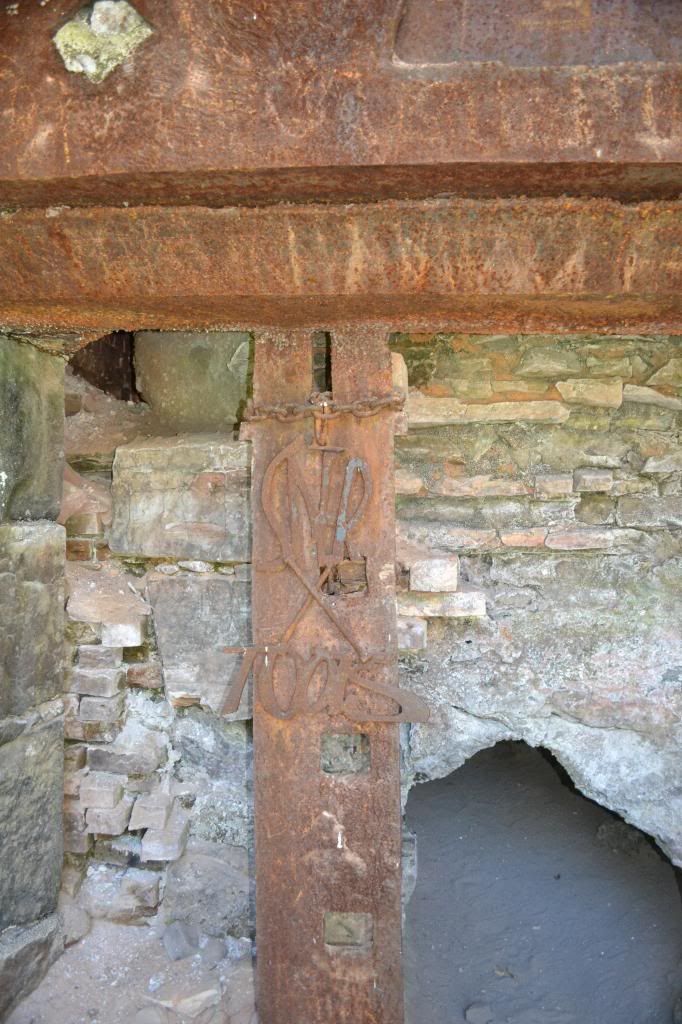
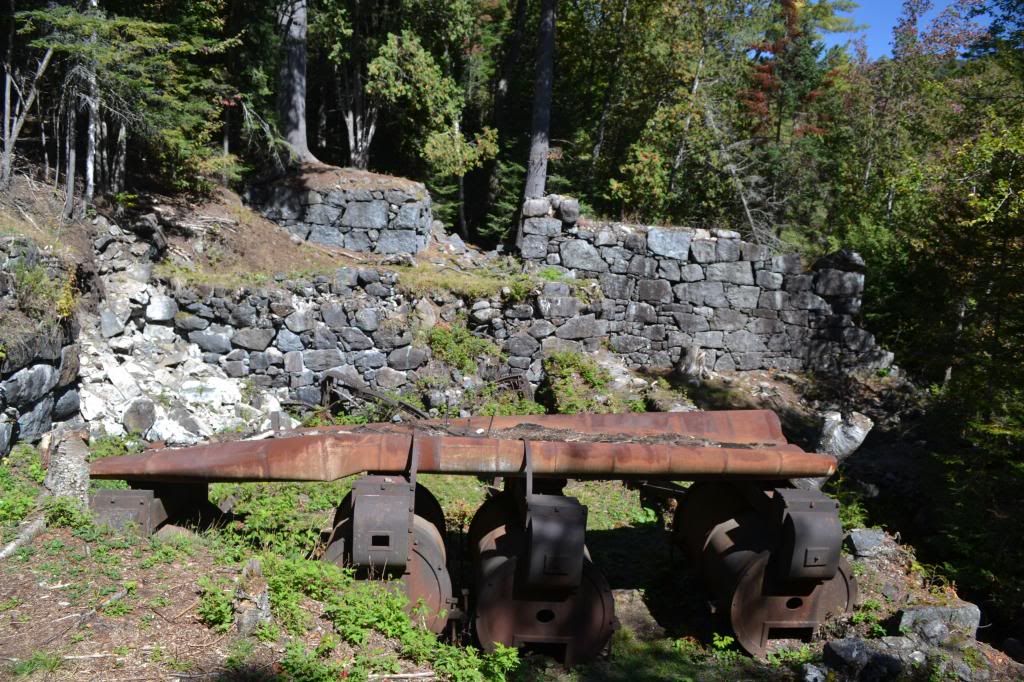
As I was heading up the road I spotted the old McIntyre Blast Furnace and stopped at the turn off.  Several trails lead around to the base of the structure.  The furnace is covered by a glass structure and there are piles of brick stacked neatly nearby.  Evidently there had been some restoration work done to stabilize the furnace.  On the backside, the one that faces the Hudson River there is an opening into the chimney.  I took the time to crawl in through the opening and shot a few pictures looking straight up the stack.  There are the remains of the duct-work where air would be blown into the heart of the furnace where a combination of powdered limestone or marble would be added to the iron ore to burn out the impurities.  There are also the foundations for more machinery closer to the river.

After exploring the blast furnace I continued down Upper Works Road and eventually passed several buildings, one of which is preserved very well and had a sign indicating that Theodore Roosevelt was staying in the village of Tahawus in 1901 with his family when a ranger rode out to inform him that then President William McKinley was in critical condition.  Roosevelt, upon arriving in Buffalo, learned that William McKinley died and later took the oath of office.

Further up the road I started passing more buildings, these in not so great shape.  Time and flooding had taken its toll and the buildings were in a severe state of decay.  I parked along the side of the road as this was its end and is the trailhead for Mt. Marcy and the surrounding peaks.
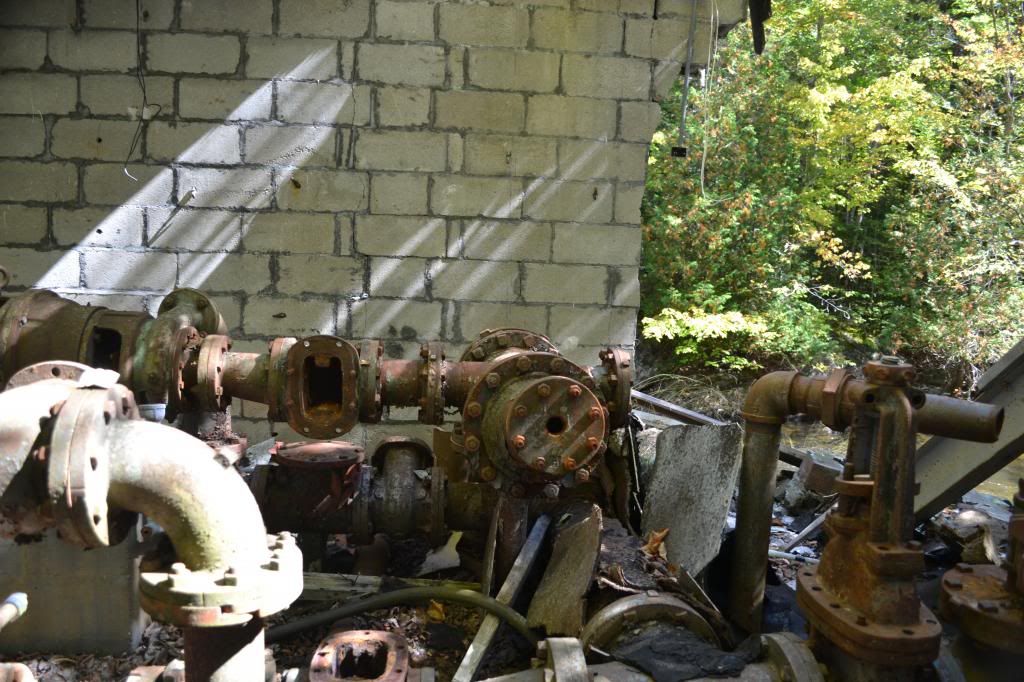

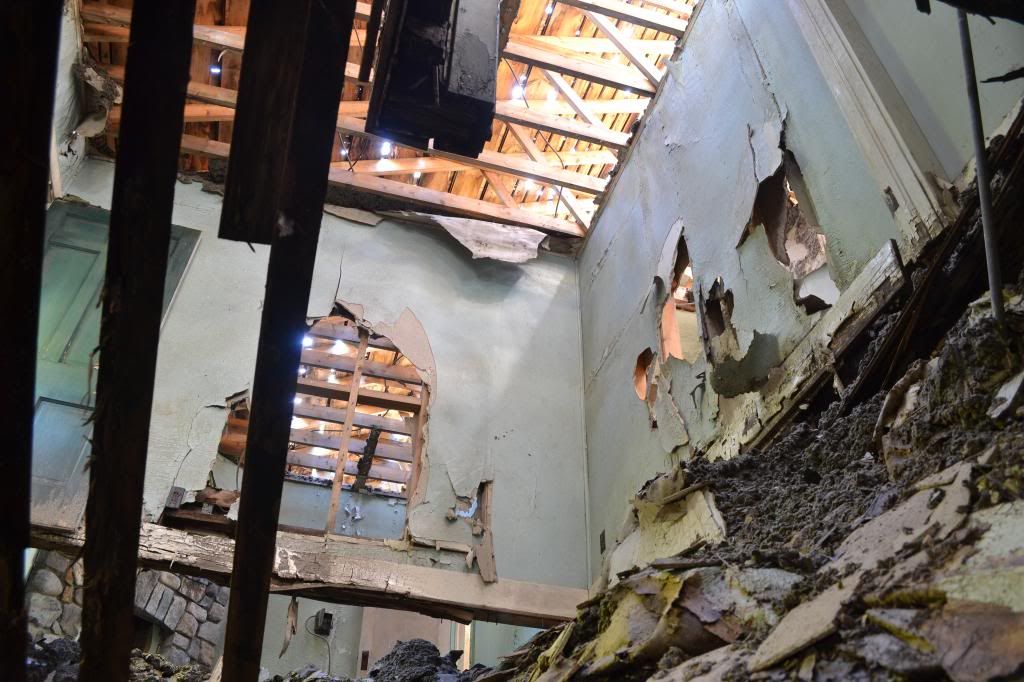
Starting down a faint footpath the first structure I found was the Pump House.  The roof is long gone, the machinery now silent.  I explored this and the surrounding houses, all of which are not structurally sound in the least and great care was necessary to make sure that I didn't bump into anything that could cause a floor to collapse from above.  I toured the area for about another hour before having to start my now six hour drive back to NH.

Click on the gallery below for larger images of the furnace and other structures of Tahawus Village

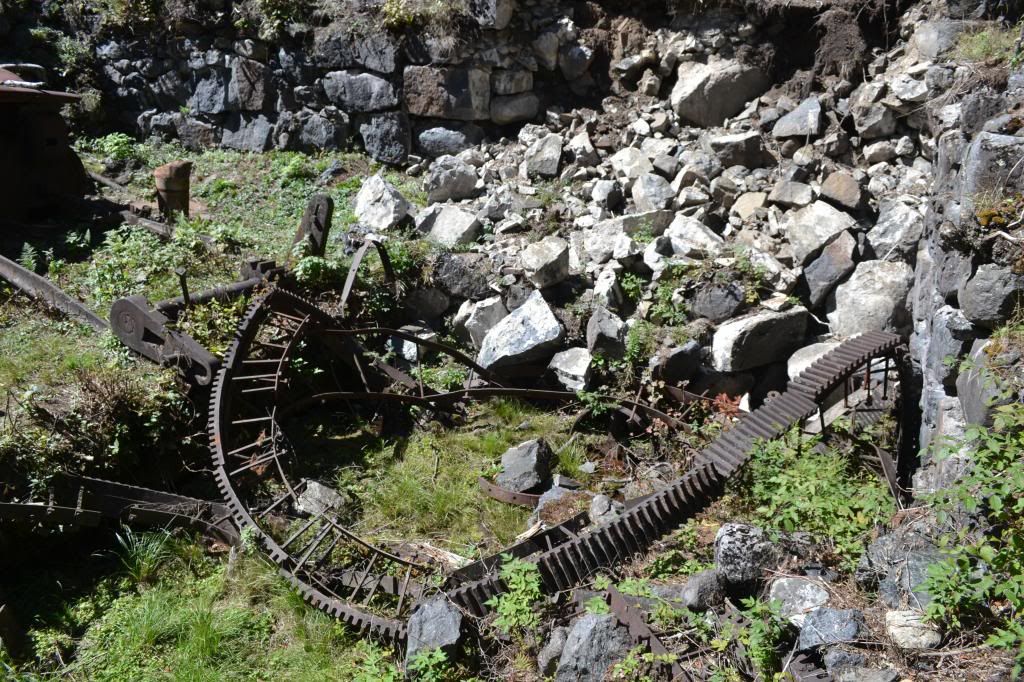
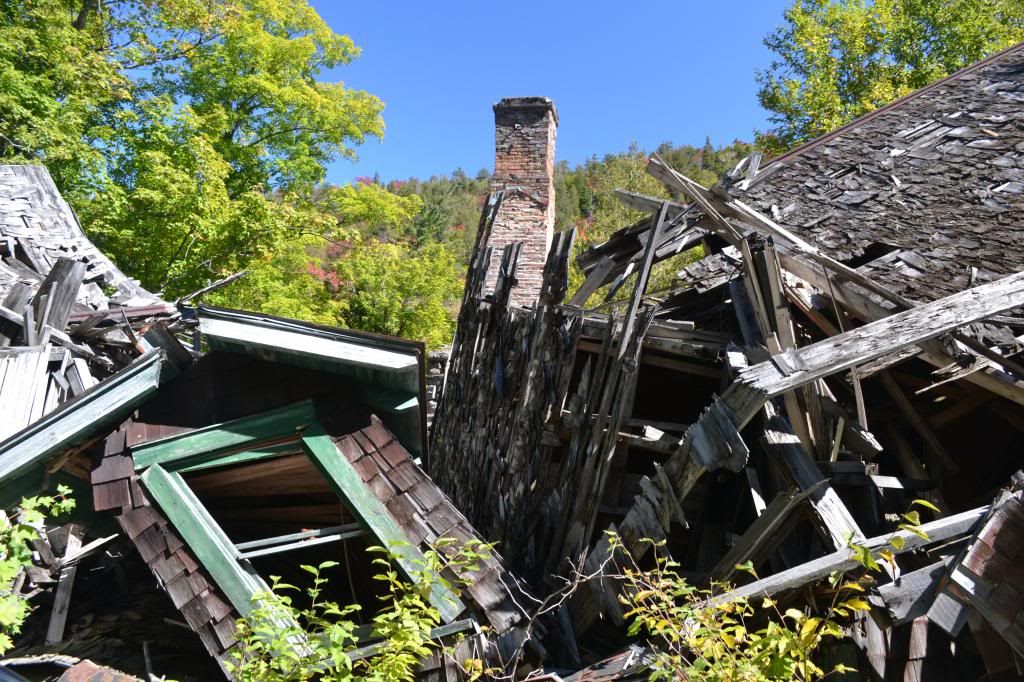
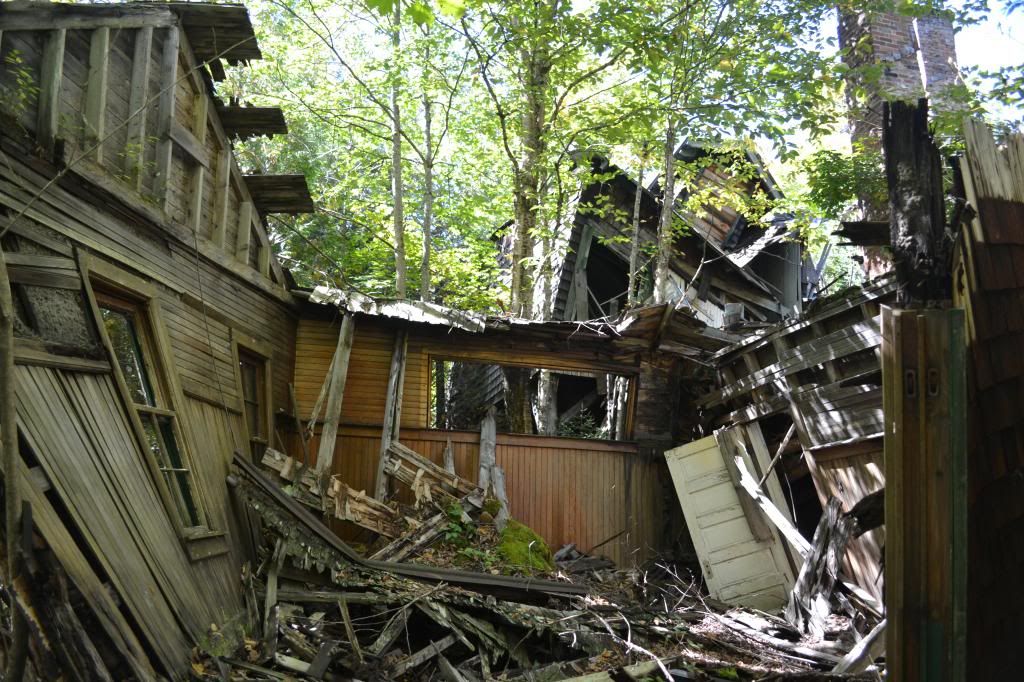
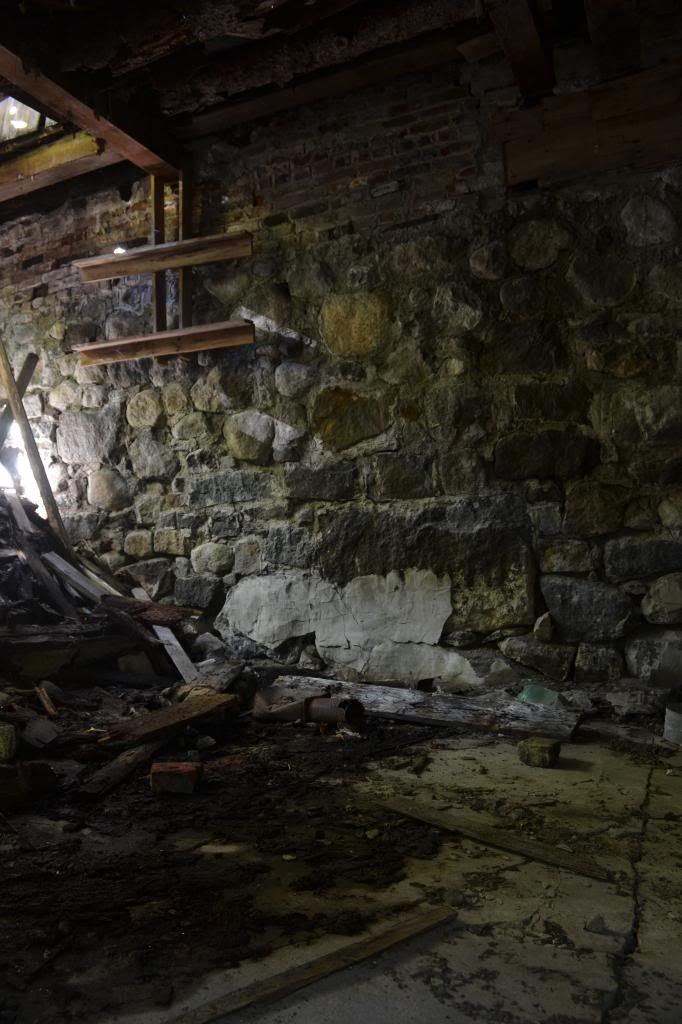




The part that I visited is the part that is publicly accessible.  The mines themselves are not and remain the property of National Lead Industries.  The old mine pits are not visible from the road as there is a pile of tailings that obscure them on the opposite side of the river from Upper Works Road.

A little more about the history of the area can be found at the Adirondack Park Agency's webpage.  This is a very easily accessible area due to the direct access road, but due to this it loses that "ghost town" feel.  However, it is still a great place to visit, perhaps on your way to hike up Mt.Marcy, the highest peak in New York State.  If you do decide to enter the buildings, it is at your own risk.  Be aware that the floors in most of the buildings are not stable and have collapsed through in many.  There is a lot of broken glass and rusting metal, so wear long pants and gloves are advisable to avoid getting cut.  There is very little evidence of vandalism which is nice to see, so please respect what remains and do not remove material from the site so others may enjoy.

Friday, June 26, 2009

John Boyd Thacher State Park, NY


So, after completing the return trip to Clarksville Caves, we needed something else to do to fill out the afternoon. Fortunately, the gentleman who was a representative of the Northeastern Cave Conservancy was also very familiar with the area's attractions of the outdoor type (my personal favourite), and he recommended that we go to the John Boyd Thacher State Park which was only twenty minutes away.

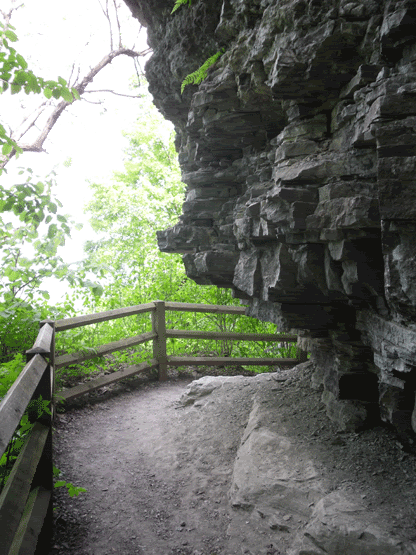
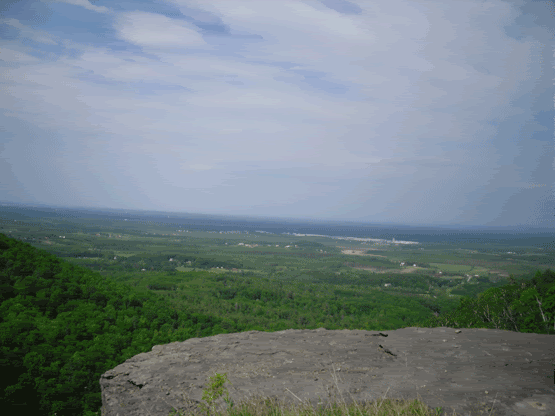
The predominant feature of the park is a huge ledge of limestone sitting on top of the local shales, surrounded by dense forests, waterfalls, and decent vistas of the Adirondack Mountains and the Green Mountains of Vermont. The views below are incredible, and in the distance it is possible to see the city of Albany, the state capital of New York.

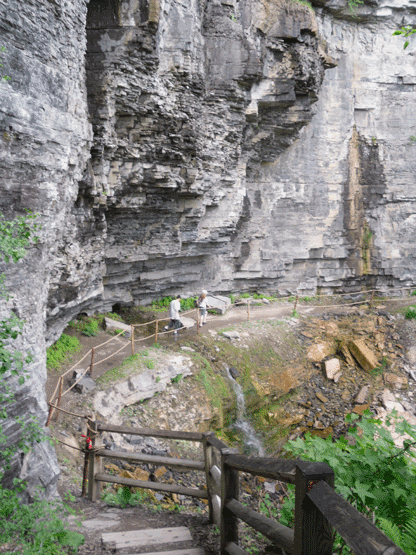
He recommended to us the "Indian Ladder" trail, a trail that takes you along the bottom of the ledge. Named for the fact that the local Native Americans used to cut down trees, and then climb up them like a ladder, it is one of the most fossil rich areas in the world.


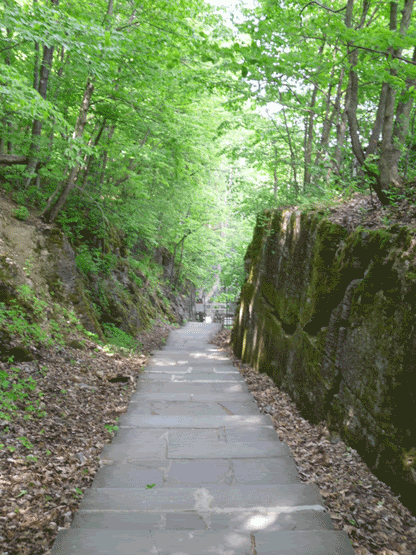
After the incredible drive to the Visitor Centre, we headed down to the trailhead where fortunately we were not forced to climb up and down trees as ladders as there is a modern, and very easy trail. Taking a close look at the Helderberg Limestones, you can easily spot the fossil remains of chrinoids and brachiopods.

Dotted all along this trail are numerous springs issuing from crack in the rock. The area's unique geology has provided the right coniditions for the development of caves and underground springs, many of which issue from this rock. However, long the way are numerous signs asking people not to climb on the rocks, mostly to safeguard them from getting injured on the way into the caves.


Along the trail are two waterfalls that cascade over the trail, however there was a mere trickle on our trip as there hadn't been much rain (until after we left).


The hike itself on the Indian Ladder is very short, less than half a mile, but this would be a good place for families or fossil-heads to visist, just please do not collect the fossils. For more information, please visit: the John Thacher State Park website. There you can also find a really decent map showing you the other trails. It is also the ending point for the Long Path, a trail that extends from New Jersey all the way into the Albany area.

Sunday, June 21, 2009

Clarksville Redux


May 23rd we revisited Clarksville Caves just outside of Albany, NY. As I am trying to light a fire under some friends' tails to get caving ('cause after all, the world could use a few more responsible cavers out there). We drove down the previous Friday evening hoping to arrive at the hotel before 11:00 om (like the last time), and after some crafty maneuvering on my part, we arrived just after ten o'clock (I don't drive like a granny ALL of the time).

So, after a good night's rest we arrived at the now familiar sink of Ward-Gregory, aka Clarksville cave. We found that we were the second vehicle to arrive, the first person was a very informative gentleman who happened to be a representative of the Northeastern Cave Conservancy (and is also the warden of nearby Onequethaw Cave, a very wet cave with some notorious features such as "The Barnyard"). He asked us if we were familiar with White Nose Syndrome (a disease that is responsible for the death of approximately 1,000,000 of the hibernating bats in the affected area, some of which are the endangered Indiana Bat Myotis sodalis and the adorable Virginia Big Eared Bat Corynorhinus townsendii virginianus. The fungus has just been classified and more can be read about it here). I explained that we were, and of my recent trip down into Virginia and West Virginia and what we had found there.


So, we headed into the cave, this time our goal being to get better pictures than the last (caves have the amazing ability to swallow light as it turns out), and to finally make it back to the Lake Room, a goal that we fell just short of as it turns out the last time we were in.


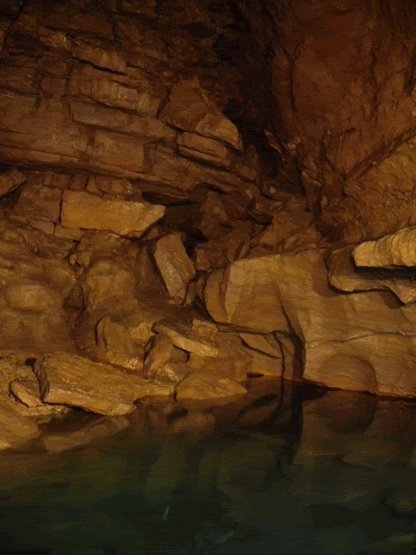
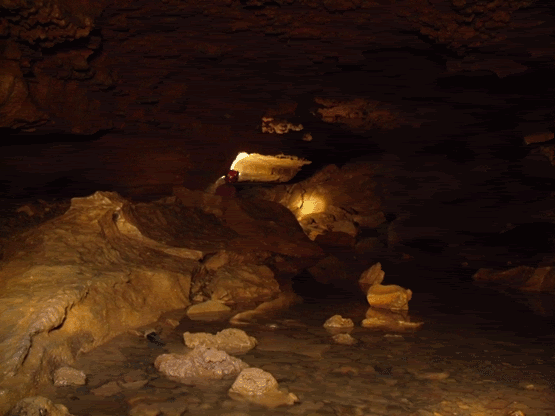
Clarksville is always a joy to go into, even though it is well visited. The recent good rains had raised the stream level a bit, but nothing that the use of wet-suit socks couldn't keep at bey. After reaching the point where we had stopped the last time (just upstream of the Thook Passage and Pictograph Crawl, I scouted ahead through an up-climb and found the passage dropped back down into a pleasant if not wet walking passage. The trick was to get everyone else to do it! After a little cajolling, and allowing the novices to lead, we made it through and came upon the Lake Room. After a few minutes of picture taking (this time with a mini-tripod and using Keluo Yao's light painting technique) we headed back through the crawl to the main passage. One more stop for picture taking (and did a not too shabby job), we headed out for some lunch at the neaby, recently re-opened establishment called June's for some hot coffee and brunch. All in all, a sucessful introductory trip into Clarksville Caves.